
 Stone Method
Stone Home to Pro Upgrade (Digital Download)
$59.00 Add to cart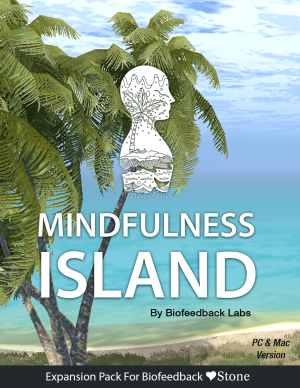
Mindfulness Island — Biofeedback Games & Meditation Software
$97.00 Add to cart
Breathing Ball by Dr. Troy — Visual Meditation Tool
$19.99 Add to cart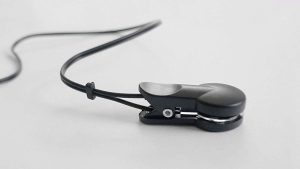
Flow HRV Ear Sensor — Replacement Bluetooth Sensor
$37.98 Add to cart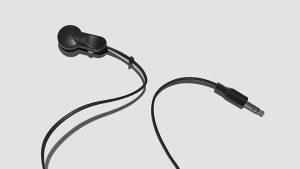
Stone HRV Ear Sensor — Replacement Clip Sensor
$37.98 Add to cart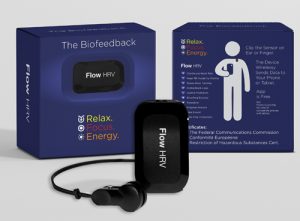
Flow HRV — Android Biofeedback Monitor with Ear Sensor
Original price was: $149.00.$99.99Current price is: $99.99. Add to cart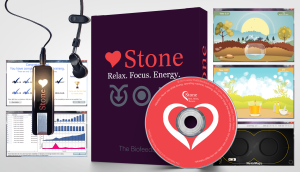
Stone Pro — Professional HRV Biofeedback System
$197.00 Add to cart
By Potężna Aktualizacja Biofeedbacku | Stres stop, relaks i koncentracja start 04:12 20/03 - 04:12
[…] Wersja video z anglojęzycznym z lektorem dostępna jest tutaj. […]
By Sponsor Deepak Chopra Event | The Biofeedback Blog 03:33 08/05 - 03:33
[…] What Dr. Deepak thinks about biofeedback hrv technology we use in Stone you can watch here. […]
By JDWOODYARD 17:06 08/05 - 17:06
Excellent, gonna try this.
By Catherine Hislop 11:21 10/06 - 11:21
Excellent
By Brazos Minshew 18:55 26/02 - 18:55
An objective measure of fatigue
I recently read a systematic review of the medical literature which included a study on Biofeedback mitigating fatigue in people following a Traumatic Brain Injury (TBI). The study demonstrated statistical and clinical efficacy for biofeedback in relieving fatigue. However, the literature review graded the quality of the results “low to very low” using the GRADE system. It stated, “Although the four types of intervention … showed unequivocally effective results, the quality of evidence was low/very low according to the GRADE system.”
This made me ask the question, “Is an objective measure of fatigue desirable? Is it even possible?
Words make Worlds: Subjective vs. Objective
According to Vocabulary.com, “Anything objective sticks to the facts, but anything subjective has feelings.” Vocabulary.com goes on to suppose that Subjective and Objective are opposite concepts. In this literature review, the GRADE system used in calculating benefit and even the Vocabulary.com definition of ‘objective vs. subjective’ there seems to be an inherent bias in favor of objective ‘facts’ (?) versus the subjective experience of someone who suffers fatigue following a TBI. My personal bias is exactly opposite.
I graduated clinical biofeedback with Jack Sandweiss, MA of UCLA and Philip Hughes, PhD in Berkeley. Thereafter, I served two three-year terms as a clinical researcher in Vancouver, BC at Occidental Institute with Walter Sturm and conducted “in-service” trainings as a guest speaker at Albert Einstein School of Medicine in Queens, New York and Yale University’s St. Raphael Hospital in New Haven, Connecticut. I started a Stress Management program at Charter Psychiatric Hospital with Anthony Picchioni, PhD and Gary Malone, MD. I also served at the Howard Center for Mind-Body Medicine, Baylor-Irving, directed by Sally Hill, RN.
And, I suffered disabling fatigue following a TBI in 2007.
I repaired my injuries using a multi-disciplinary approach which included biofeedback. My bias was significantly slanted toward ‘how I felt,’ as opposed to how I performed on objective metrics. My experience made me remember a time when “how do you feel?” was an important question.
We can use our Words to make a better World by remembering that how people feel matters because People Matter!
Biofeedback therapy
Even as the literature review stated, “Conventional electroencephalographic biofeedback has the potential to improve the cognitive symptoms and problematic behaviors. In between-group comparisons, the intervention group exhibited significantly improved General Fatigue and Mental Fatigue subscale scores versus the control group, though the total Multidimensional Fatigue Inventory (MFI) score did not change significantly [Schoenberger et al. 2001].
However, let us not forget that in the art of medicine, “How people feel” is legitimately important! As we promote our profession, it is critical that we focus on illuminating the legitimacy of our craft to an increasingly skeptical world. It is also critical to the survival of our personal career that use our education and experience to relieve suffering and improve the way people feel!
Brazos G. Minshew, MS, ND
Ther Adv Neurol Disord. 2017 May; 10(5): 229–239.
Published online 2017 Feb 1. doi: 10.1177/1756285616682675
PMCID: PMC5426526
Complementary and alternative interventions for fatigue management after traumatic brain injury: a systematic review
Gang-Zhu Xu, Yan-Feng Li, Mao-De Wang, and Dong-Yuan Cao
By Energetischfit 02:24 07/03 - 02:24
Great information provided. I appreciate your work. I like the way you write. Awesome, keep it up relaxation
By richa taylor 10:04 27/01 - 10:04
Thank you for sharing the video with all of us. The information video contains is on point and very useful for everyone. Also, it would be great if you add more text with video for a better understanding. So, keep sharing such information with us in the future also.